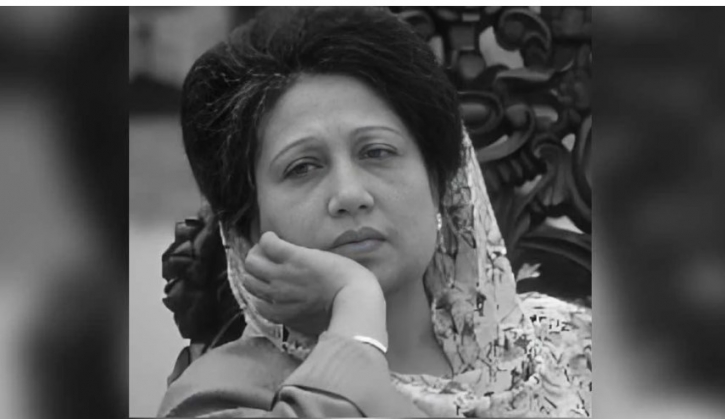
The death of BNP Chairperson and three-time former prime minister Begum Khaleda Zia, regarded as an uncompromising leader for democracy in Bangladesh, got wide coverage in the international media.
Leading global news agencies and media ran reports on her long political career, leadership and role in shaping the political landscape of Bangladesh politics.
News Agency AFP reports: Bangladesh's former prime minister Khaleda Zia, who many believed would sweep elections next year to lead her country once again, died on Tuesday aged 80, her party said.
The government declared three days of state mourning, with her funeral to be held on Wednesday.
Despite years of ill health and imprisonment, Zia vowed in November to campaign in elections set for February -- the first vote since a mass uprising toppled her arch-rival Sheikh Hasina last year.
BBC published a report with the headline "Khaleda Zia: Slain leader's widow who became Bangladesh's first PM".
Khaleda Zia, who has died at the age of 80, was Bangladesh's first female prime minister.
She was once described as a "shy housewife" to her husband Ziaur Rahman, a leading figure in the country's struggle for independence who became the president in 1977.
But following her husband's assassination in 1981, Begum Zia rose to lead his Bangladesh Nationalist Party (BNP) and served two terms as prime minister - first in the 1990s and then in the early 2000s.
Her tumultuous public life did not end after her premiership - she was later accused of corruption and spent years in prison - but the charges were dropped after a 2024 uprising that saw her long-time rival, Sheikh Hasina, swept from power.
Associated Press (AP) in its report says former Bangladeshi Prime Minister Khaleda Zia has died, her Bangladesh Nationalist Party said in a statement Tuesday. She was 80.
She had faced corruption cases she said were politically motivated, but in January 2025, the Supreme Court acquitted Zia in the last corruption case against her, which would have let her run in February's general election.
The BNP said that after she was released from prison due to illness in 2020, her family requested the administration of her archrival, former Prime Minister Sheikh Hasina, at least 18 times to allow her to be treated abroad, but the requests were rejected.
Following Hasina's ouster in 2024, an interim government headed by Nobel Peace Prize laureate Muhammad Yunus finally allowed her to go. She went to London in January and returned to Bangladesh in May.
Reuters reports: Khaleda Zia, Bangladesh's first female prime minister, dies at 80
Khaleda Zia, who became Bangladesh's first female prime minister in 1991, died on Tuesday after a long illness. She was 80.
Her party Bangladesh Nationalist Party (BNP) said that she died after a prolonged illness. She had advanced cirrhosis of the liver, arthritis, diabetes, and chest and heart problems, her doctors said.
Aljazeera in its report says, Khaleda Zia, Bangladesh's first female prime minister and a towering figure in the country's turbulent politics, has died at the age of 80 after a prolonged illness, according to her party.
The Qatar-based media ran another report with headline "Khaleda Zia, Bangladesh's first woman PM: A life of power and resistance".
British daily The Guardian in its online version reports: Khaleda Zia, first female Bangladesh prime minister, dies aged 80
Indian news agency PTI reports: Khaleda Zia: A formidable figure who dominated Bangladesh politics for decades.
Khaleda Zia, the first woman prime minister of Bangladesh and the second in the Muslim world, dominated the country's politics for decades.
Khaleda Zia, the longtime chief of the Bangladesh Nationalist Party (BNP) and a three-time prime minister, died early Tuesday in Dhaka after a prolonged illness. She was 80.
She is admired by her supporters for her role in restoring democracy in the country. Khaleda Zia largely dominated Bangladesh's politics in the 1990s as well as in the early 2000s.
India's Bengali newspaper Anandabazar ran a report on the demise of Begum Khaleda Zia.