Universities are not just halls of exams or stages for graduation; they are the quiet engines where a nation’s tomorrow is imagined, tested, and built. When they research, they do more than fill journals; they craft answers to life’s urgent questions: how to fight dengue and diabetes, how to grow rice in salty soil, how to help small businesses thrive, how to teach minds to think, and how to shield cities from floods. In these pursuits, universities become the nation’s think tanks giving policymakers evidence, entrepreneurs ideas, and citizens hope. They shape human capital with curiosity, critical thinking, and ethical judgment, while lifting the country’s name on the global stage. For Bangladesh and other developing nations, the question is no longer does university research matter? but can we afford the silence of not doing it?
Despite a surge in university enrolment, the contribution of research to GDP, patents, and policy remains disproportionately low, revealing a gap not of talent, but of structure, support, and strategy. In too many institutions across the Global South, the teaching load leaves little oxygen for inquiry. Funding is thin, labs are outdated, and administrative processes are heavy. Industry and university ties are episodic rather than systematic; international collaboration is often limited to one-off projects instead of sustained programs; and incentives tilt toward degrees earned or hours taught rather than discoveries made, or problems solved. Promotions are tied to counting publications, not measuring impact. The problem is not talent; Bangladesh has it in abundance. The problem is structure, support, and strategy. When brilliant minds are asked to climb without stairs, the bottleneck is inevitable.
Moreover, students are our most underused research asset. If we recast them as future innovators rather than passive recipients of content, the transformation begins. Inquiry-based learning, where a question leads the lecture, not the other way around; teaches curiosity, rigor, and humility. Undergraduate research projects, reading circles, and student-led data clubs can be simple, low-cost interventions with high returns. Participation in conferences, hackathons, and innovation challenges exposes students to critique and collaboration; two habits that build lifelong competence. Strengthening academic writing and data analysis isn’t optional; it is the literacy of the modern knowledge economy. Digital research skills, from database navigation and citation ethics to using AI responsibly, must be taught early, so tools become accelerators of thinking, not shortcuts around it. Most importantly, problem-oriented research anchored to local realities; urban drainage in Narayanganj, microfinance design for rural women, the cost and access of healthcare in coastal districts, cultivates relevance. Western theories often misread South Asian contexts; students who co-author with faculty on projects rooted in Bangladesh will produce knowledge that travels from classroom to community.
Besides, teachers, too, must be positioned as knowledge leaders, not just lecturers. Balancing teaching with a research-active identity does not mean “publish or perish”; it means “discover with purpose”. Quality, relevance, and societal impact should be the compass. Interdisciplinary teams can unlock new angles on stubborn problems, agronomy plus data science; public health plus behavioural economics; climate modelling plus urban planning. International collaboration, pursued strategically, brings methods and mentorship, not just co-authorship. Faculty output should include policy briefs and practitioner toolkits, alongside journal articles, so knowledge breaks out of gated formats and into ministries and markets. Capacity building is essential: methods refreshers, grant-writing workshops, and mentorship for early-career academics create a pipeline of confident researchers. Recognition, workload relief during active projects, and institutional trust are not perks; they are preconditions. Many Asian academics publish under constraints, reduce the constraints, and you release the impact.
Universities themselves hold the policy lever. A clear research vision, tied to national priorities, prevents scatter and builds momentum. Dedicated research offices can reduce transactional friction; ethics review, data support, contracting, and compliance, so scholars spend time on ideas, not forms. Seed funding and internal grants signal belief and unlock external grants later. Incentives should reward patents, prototypes, policy influence, and community outcomes, not only publication counts. Reducing the over-reliance on teaching hours during funded projects is a practical reform that pays dividends. Industry-government-university partnerships must move from signing ceremonies to shared roadmaps and co-created labs. Open-access publishing widens reach; South-South collaboration recognizes that countries facing similar constraints can co-develop solutions without waiting for approval from elsewhere. For Bangladesh, aligning university research with Vision 2041, the SDGs, and the Smart Bangladesh agenda is not a slogan, it is an organizing principle.
Furthermore, when done well, research creates tangible economic value. It boosts productivity through process innovation, helps SMEs upgrade products and enter new markets, and nourishes the startup ecosystem with credible technology and tested ideas. It improves public policy, how we allocate health budgets, design school curricula, target social protection, and adapt to rising temperatures. It reduces dependency on imported models that fit poorly and cost dearly. It creates jobs not only for PhDs in R&D labs, but for data analysts, product managers, climate-tech entrepreneurs, and knowledge translators who turn findings into services. For examples, agricultural research that improves saline-tolerant rice or flood-resilient aquaculture; health research that lowers treatment costs with task-shifting and community diagnostics; education research that raises learning outcomes with structured pedagogy; climate research that enhances disaster resilience through early warning and community preparedness. Each is a public good and an economic engine.
Asia offers clear lessons. Countries that invested consistently in university research, for example: Malaysia, China, South Korea, built durable innovation capacity and globally competitive industries. India’s strong STEM base and increasingly vibrant university-startup linkages show how talent and technology can co-evolve. Vietnam’s applied, industry-linked model demonstrates that modest budgets can yield substantial outcomes when partnerships are tight and priorities are clear. The common thread is patience: research investment is not a cost on a balance sheet; it is a long-term national asset that compounds.
So, what must we do, now? Students can be curious, not credential-driven. Seek questions harder than answers; co-author, don’t just consume. Teachers can be creators of knowledge, not only transmitters. Design assignments that begin with real problems and end with real audiences. Universities can be innovation hubs, not examination factories. Build structures that protect time, fund ideas, and measure impact. Policymakers: fund research as a development priority, not a discretionary extra. Create grant programs that reward relevance and rigor, and demand that public-funded knowledge returns to the public.
If research is the engine, will we give it fuel? For nations like Bangladesh, the choice is clear: keep importing answers or start creating our own. The future we dream, innovative, fair, and resilient, will rise from the questions we dare to ask today. University research is not a luxury; it is our lifeline. The question is no longer does it matter? but can we afford to ignore it?
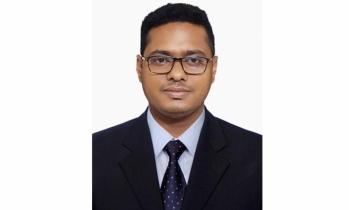
Author: Dr. Mohammad Rashed Hasan Polas is an Assistant Professor at the Strategic Research Institute (SRI), Asia Pacific University of Technology and Innovation (APU), Technology Park, Kuala Lumpur, Malaysia. His research and writing focus on education, innovation, and sustainability.