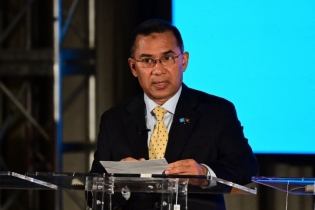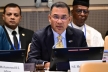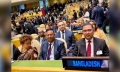
Prime Minister Tarique Rahman proposed five urgent measures to resolve the Rohingya crisis today,
urging global stakeholders to establish a clear roadmap for the safe, dignified, and sustainable
repatriation of the Rohingya people to Myanmar.
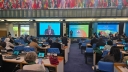
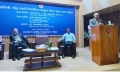
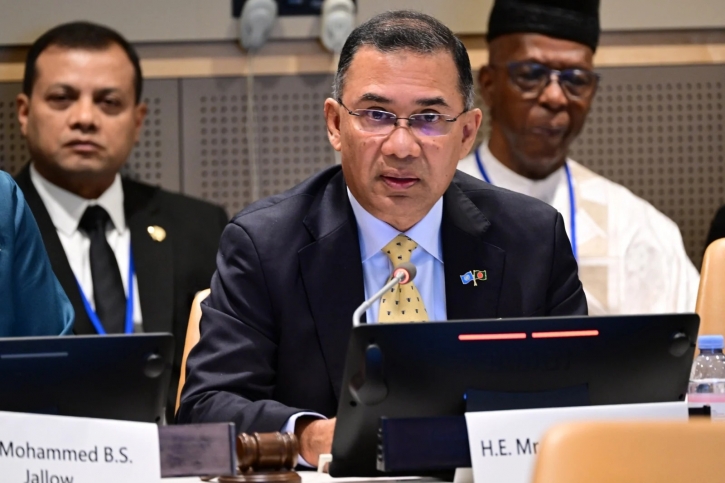
Addressing a high-level side event titled 'The Rohingya Crisis: A Renewed Call for a Durable Solution' at
the UN headquarters on September 23, the Prime Minister declared, "The time has come to move from
empathy to a search for root causes and their solutions, from promises to action and from managing
displacement to ending it."
Highlighting the plight of over 1.2 million Rohingyas currently sheltered in Bangladesh, Rahman outlined
five core proposals for the international community:
Repatriation Roadmap: Establish a clear, credible framework for the early, voluntary, and sustainable
return of Rohingyas to Myanmar, using international leverage to create conducive conditions.
Civilian Protection: End violence against civilians in Myanmar and guarantee their fundamental rights
and security so they can regain the confidence to return home.
Humanitarian Support: Ensure predictable and adequate humanitarian aid for both the displaced
Rohingyas and their generous host communities.
Justice and Accountability: Support accountability mechanisms—praising The Gambia's leadership at the
International Court of Justice (ICJ) and the ongoing work of the International Criminal Court (ICC)—to
hold perpetrators of grave crimes responsible.
Combat Transboundary Crimes: Step up regional and international cooperation to tackle the narco-
economy, human trafficking, digital scams, and illegal arms smuggling fueled by the region's instability.
"Bangladesh does not want the Rohingya to remain displaced forever," Rahman said. "We want them to
return their homes in Myanmar safely, voluntarily, with dignity and with their rights protected.
Bangladesh has carried its responsibility with humanity. Now the international community must carry its
responsibility with conviction."
The Prime Minister emphasized that because the crisis originated in Myanmar, its ultimate solution lies
there. He expressed deep concern over the deteriorating situation in Rakhine State, citing serious
violations, forced recruitment, and arbitrary detention by both the Myanmar military and the Arakan
Army.
For over nine years, Bangladesh has provided food, healthcare, and education to the refugees. However,
Rahman warned that "humanitarian generosity cannot become an excuse for political inaction," nor can
Bangladesh shoulder the burden indefinitely. He cautioned that prolonged displacement breeds
transnational security threats, noting, "A crisis left unresolved in one country can become a security
challenge for an entire region."
Concluding his remarks, Rahman urged the world to ensure the Rohingyas’ future is defined by justice
and hope rather than persecution.
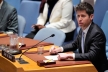
The event, co-convened by Bangladesh and The Gambia, was moderated by Bangladesh's UN Permanent
Representative Irene Zubaida Khan. It featured addresses by UN General Assembly President Dr. Khalilur
Rahman, Gambian Vice President Muhammad B.S. Jallow, and UN Special Envoy on Myanmar Julie
Bishop.
Other prominent speakers included high-level representatives from the EU, UK, US, Turkiye, Saudi
Arabia, Australia, Malaysia, and Thailand, alongside senior officials from the WFP, UNFPA, OHCHR, and
IOM, all echoing the urgent need for a unified global response.