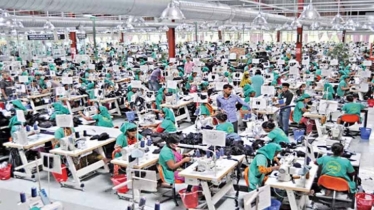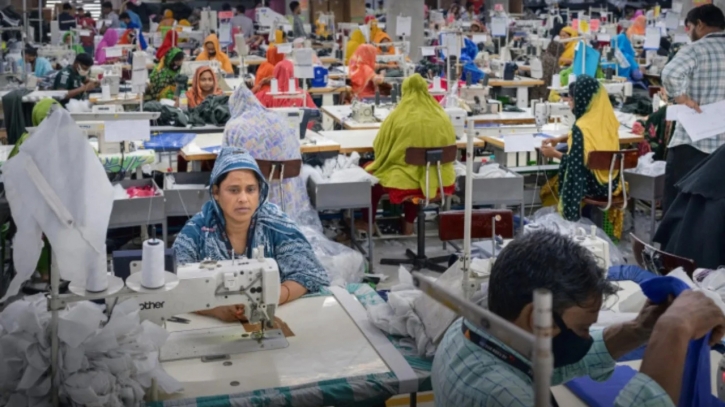
Industry insiders have found political incitement behind unrest in garment industries saying there is no justification of destructive protect following formation of a committee to fix up wages of the workers.
Despite formation of a six-member wage board by the government to revise the minimum wages of the readymade garment (RMG) workers and decision to make the new wages effective from December 1, the incidents of protests, factory vandalism, road blockades and clashes in the industrial areas are not desirable, they said.
The continuation of unrest has raised questions whether the movement initially was launched over workers' wage demands is being fuelled by political interests.
Industry entrepreneurs, industrial police and National Board of Revenue's (NBR) investigation into alleged financing for creating the unrest have brought the issue of possible political links to the forefront.
Shovon Islam, managing director of Sparrow Group and a former director of the Bangladesh Garment Manufacturers and Exporters Association (BGMEA), told BSS that the continuation of protests even after the formation of the wage board and the decision to implement the new wages from December 1 was unusual.
He said the ongoing situation could not be viewed as a normal labour movement, alleging that political motives and the involvement of a third party were behind the unrest.
Shovon said he had never witnessed such protests after the formation of a wage board. He also questioned how many of those participating in the demonstrations were genuine garment workers, claiming that a large number of them were outsiders.
He alleged that certain quarters were trying to disrupt production in the country's garment industry and damage Bangladesh's image internationally. He urged the government to identify those involved in such activities and bring them to justice.
Shovon also questioned the demand for fixing the minimum wage at Taka 30,000, saying that a proposed 156 percent increase in wages at a time is not realistic considering the industry's existing capacity and economic circumstances.
He said a situation was being created on the demand for Taka 30,000 minimum wage that could pose a serious threat to the country's garment industry.
Industrial police have also pointed to possible political links behind the recent unrest in the RMG sector.
Possible political connections have emerged between a section of labour leaders and some owners of large factories based on their past political affiliations.
Law enforcement agencies also suspect that some politically active individuals in guise of garment workers have taken jobs in factories in industrial areas to incite unrest.
Former Industrial Police official Gazi Jasim told BSS that the police had noticed links between a section of labour leaders and some factory owners who had political affiliations in the past.
He said a significant number of labour leaders had political associations during the previous government, while some owners of large factories also had political connections. The police suspected that there was a nexus among these groups.
Gazi Jasim further said some labour leaders allegedly encouraging workers behind the scenes not to return to work.
According to the industrial police, some politically active individuals from different rural areas may have secured jobs in factories in industrial zones by identifying themselves as workers.
Being unable to remain involved in political activities in their respective localities, some of them are staying in industrial areas and contributing to the unrest.
The police have also found indications of deliberate attempts to complicate the situation through an analysis of social media campaigns and developments on the ground.
Meanwhile, the NBR is investigating allegations of financial support provided by politically affiliated individuals and businesspeople to create unrest in the garment sector.
As part of the investigation, the revenue authority on November 5 directed for freezing bank accounts of 204 individuals and organisations. It also sought detailed transaction records from several entities.
The list reportedly includes former ministers, members of parliament and influential businesspeople linked to the previous Awami League government.
The NBR is investigating whether funds were supplied to fuel unrest in industrial areas and who was behind the alleged financing.
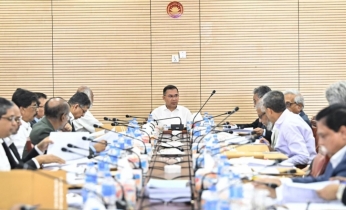
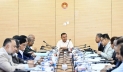
On the other hand, the Minimum Wage Board has reiterated its commitment to advancing the process of determining workers' wages.
Board Chairman Syed Azad Subhani said regardless of the date of announcement, the new wages would come into effect from December 1.
He said the next meeting of the board would be held on November 23. Workers would receive the increased wages for December along with their January salaries.
Economists have called for considering both workers' living costs and the industry's capacity in determining the new minimum wages.
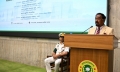
At a press conference organised by the Centre for Policy Dialogue (CPD) today, the think-tank proposed a wage structure ranging from Taka 18,578 to Taka 24,204 for garment workers.
CPD Executive Director Dr Nazneen Ahmed said specific data on living costs, inflation, productivity and the industry's capacity should be taken into account for determining the minimum wages.
CPD Distinguished Fellow Professor Dr Mustafizur Rahman said unrest in factories was harmful to production, workers and exports, and could also have adverse implications on overall economy.
He stressed the need to ensure that workers receive fair wages while maintaining the industry's production capacity and competitiveness.
Responding to a question from journalists, he said he did not believe that the ongoing situation in the garment sector was solely centred on demands for new wages.
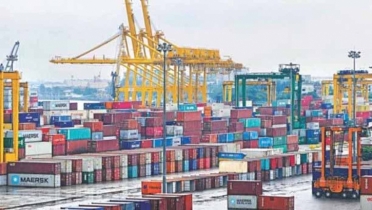
Industry insiders said the RMG sector was the country's principal export-earning industry and a major source of employment for a large number of people.
Prolonged unrest in the sector could disrupt production and export orders and adversely affect the confidence of international buyers, they said.
They stressed the need for an impartial investigation to determine whether anyone was exploiting workers' wage demands to create unrest in industrial areas for political purposes and bring those found responsible under the law.