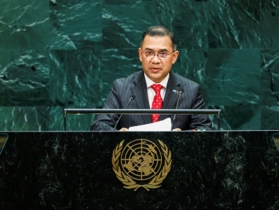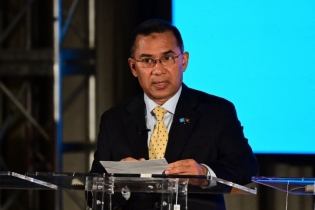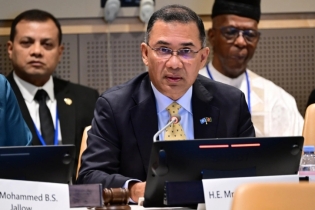
In a decisive move to combat the rapid surge of digital-age offenses, governments worldwide adopted the Abu Dhabi Declaration by acclamation on Saturday at the opening of the 15th United Nations Congress on Crime Prevention and Criminal Justice. The landmark agreement unites nations against the growing criminal exploitation of technology, cybercrime, and global fraud.
The Declaration outlines an increasingly complex global landscape where essential services, infrastructure, and advanced technologies are being weaponized by illicit networks. It specifically addresses emerging, highly organized criminal trends, including the alarming rise of “crime as a service” and “violence as a service.”
To counter these sophisticated threats, participating countries committed to upgrading their own law enforcement and judicial capabilities. This includes the digitalization of justice systems and the integration of artificial intelligence in criminal justice responses. However, the Declaration strictly emphasizes that these technological leaps must be accompanied by robust safeguards, mandating human oversight, transparency, strict data protection, and adherence to due process.
Addressing the Congress, UN Office on Drugs and Crime (UNODC) Executive Director Monica Juma described the gathering as a critical test of international cooperation in a shifting criminal landscape. Five years after the previous Congress in Kyoto, Japan, she noted that the world has reached a dangerous “inflection point” driven by the extraordinary speed of technological advancement.
“Today, the world convenes in Abu Dhabi to reaffirm that the rule of law and criminal justice are essential to the safety and security of people and the planet,” Juma stated. “At a time when confidence in multilateralism is faltering, let Abu Dhabi be a testament to international cooperation.”
Juma warned that the same platforms connecting billions of people are now seamlessly connecting criminals. Digital currencies are actively concealing illicit profits, while powerful digital tools are deployed to deceive, manipulate, and exploit the vulnerable. Technology, she argued, is not merely accelerating crime but fundamentally altering its character across borders.
Behind these broad technological trends, Juma urged delegates to keep their focus on the human cost. She identified protecting the most vulnerable—children recruited by gangs, women facing domestic or online violence, individuals lacking legal assistance, and youth lured into international scam networks—as the "north star" for the week's negotiations.
In a video address, UN Deputy Secretary-General Amina Mohammed underscored the moral imperative behind the technical discussions. “Justice cannot be a privilege. It must protect every person, uphold every person’s rights and leave no one behind,” Mohammed said, calling the Congress an opportunity to translate shared commitments into tangible action.
To ensure the Declaration moves beyond rhetoric, countries are being urged to join the voluntary Pledge4Justice initiative. Through this program, governments will announce concrete, time-bound actions to improve crime prevention and criminal justice through 2031.
Hosted by the United Arab Emirates, the Congress will run through October 1 under the theme, "Protecting People and Planet in the Digital Age." The massive gathering includes representatives from 119 countries, over 40 justice ministers, and more than 5,100 participants spanning government, civil society, academia, and the private sector.
Organizers have also highlighted this year's session as the most youth-inclusive Crime Congress in UN history. Following a dedicated Youth Forum earlier in the week, young delegates are actively participating in workshops, a specialized Youth Lab, and shaping follow-up efforts to ensure the next generation has a voice in shaping global justice.