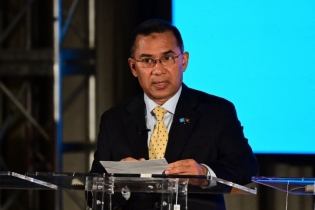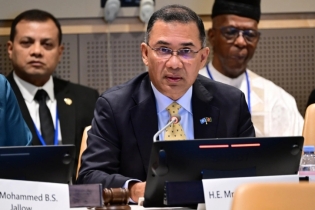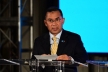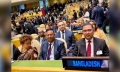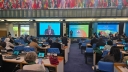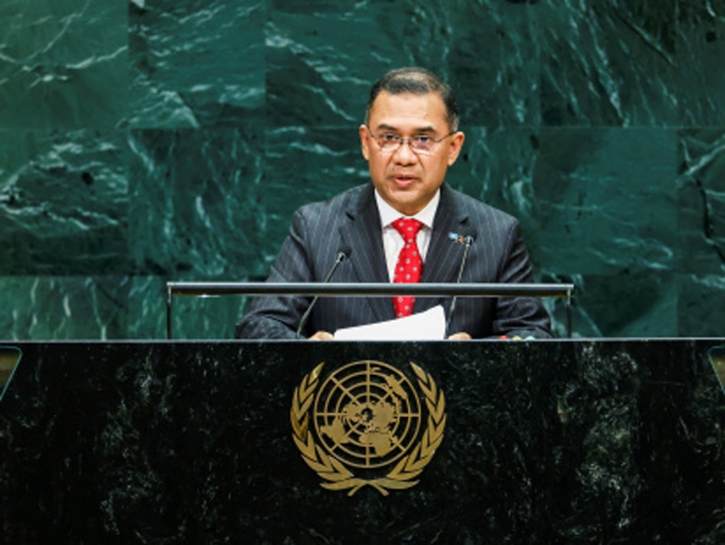
Standing before the global community at the 81st session of the United Nations General Assembly in New York, Bangladesh Prime Minister Tarique Rahman delivered a decisive and deeply reflective address on Thursday, September 24. Charting a bold new course for a nation emerging from turbulence, he announced that his government is aggressively pursuing a comprehensive "3-R Strategy"—Recovery, Restoration, and Reconstruction—designed to repair a Bangladesh left ravaged by more than a decade and a half of fascist rule, systemic exploitation, and institutional decay.
Addressing world leaders from the iconic UN rostrum, the Prime Minister painted a picture of a nation experiencing a profound rebirth. After finally freeing itself from a dark era defined by enforced disappearances, political killings, rampant abductions, unchecked corruption, and massive capital flight, Bangladesh is, according to Rahman, unequivocally embarking on the path of renewed democracy and institutional transparency.
“To repair Bangladesh, which was ravaged by fascist rule and exploitation, the Government is pursuing a 3-R strategy—Recovery, Restoration, and Reconstruction,” the Prime Minister declared to the Assembly. He noted that an immense horizon of possibilities has now opened for the South Asian nation. To seize this historic moment, his administration has already begun implementing extensive, ground-up socio-economic programs meant to transform the country's booming working-age population into a highly skilled, globally competitive human resource base, fully leveraging the nation's coveted demographic dividend.
Central to the Prime Minister’s vision is the transformation of Bangladesh into a premier global "manufacturing hub." He detailed sweeping measures already underway to create extensive employment opportunities, explicitly calling upon Bangladesh’s international development partners to support this ambitious endeavor.
Recognizing that the future of the nation lies in the hands of its youth, the government has moved swiftly to foster a culture of innovation. Rahman announced that his administration has allocated a targeted US$50 million in the current fiscal year specifically to seed young entrepreneurs, researchers, and tech innovators. This fund is designed to empower the next generation to launch start-up initiatives that can compete on the global stage.
However, the Prime Minister emphasized that economic growth cannot be limited to corporate balance sheets. He passionately argued that his government is determined to ensure not just electoral democracy, but the democratisation of the economy itself. The ultimate goal, he stated, is to guarantee that the dividends of economic prosperity and national growth reach the dinner table of every single family and citizen.
Highlighting a cornerstone of his administration’s policy, Tarique Rahman asserted that women are placed at the absolute forefront of all government plans for socio-economic transformation. Noting that women constitute more than half of Bangladesh's population, he outlined a multi-pronged approach to gender equity.
The government is prioritizing women's education, direct employment, and entrepreneurial independence. This includes radically expanded opportunities for direct cash financing for women, particularly those operating within the vital small and medium-sized enterprise (SME) sector. In a landmark educational policy shift, free education opportunities for women have now been extended all the way up to the undergraduate level.
To bridge the gap for economically disadvantaged citizens, Rahman detailed robust social protection initiatives. The government has introduced targeted welfare mechanisms, including the Family Card, Farmers' Card, Sports Card, and e-Health Card. He proudly described the Family Card—which is deliberately issued in the name of the female head of each household—as a powerful, structural symbol of women's economic empowerment. Looking forward, he revealed plans to streamline these safety nets into a single, comprehensive "Universal Card," seamlessly integrating support across multiple sectors.
These initiatives are part of a broader 31-point programme presented to the public prior to the February 12 national election. Rahman pointed out that 73 percent of this programme's activities are directly aligned with the UN Sustainable Development Goals' core theme to "Leave No One Behind," with the remaining 27 percent indirectly aligned. The administration hopes these sweeping reforms will drastically reduce urban-rural development disparities, enforcing accountability and inclusive sustainability under the UN's 2030 Agenda.
Recognizing that human capital is the nation's greatest asset, the Prime Minister highlighted unprecedented investments in human development. He noted that the country has just passed its highest-ever budget allocation for the education sector.
"There are plans to gradually increase education spending to 5 percent of GDP within the next five years," Rahman announced. He detailed a newly developed curriculum that heavily emphasizes technical, practical, and ethical education, aiming to build an employment-oriented system. To boost primary school enrollment and ensure nutritional baselines, the government is now providing school bags, uniforms, and free midday meals to primary students starting from the first grade.
In an innovative approach to youth development, sports have been formally included as a primary subject in the national education curriculum for the very first time. The aim is to establish sports not just as recreation, but as a viable, respected profession. Demonstrating the scale of this initiative, Rahman noted that over two million students participated in a massive, month-long nationwide football
Turning to international affairs, Prime Minister Rahman addressed the festering crisis in neighboring Myanmar, issuing a stark warning regarding the Rohingya refugee situation. For more than nine years, Bangladesh has shouldered the monumental burden of providing shelter to more than 1.2 million forcibly displaced Rohingyas. This prolonged crisis, he stated, has placed an unbearable strain on the country's economic resources, environment, national security, and local host communities.
"The only solution to this problem is the safe return of the displaced Rohingya population to their homeland, Myanmar," Rahman stated unequivocally. He called for firm, unified, and effective support from the United Nations and the broader international community to force a lasting political solution. Urging continued life-saving humanitarian assistance in the interim, he delivered a sobering caveat: "If the international community fails to ensure justice for the displaced Rohingya population, this may turn into a humanitarian crisis of unimaginable proportions in the near future."
As the leader of one of the world’s most climate-vulnerable nations, Rahman spoke forcefully on environmental justice. Despite contributing a fraction of a percent to global carbon emissions, Bangladesh bears the brunt of extreme weather events. He stated that Bangladesh expects significantly stronger, legally binding global action at the upcoming COP31, specifically demanding climate justice, robust climate finance, and tangible adaptation support.
Domestically, the government is not waiting for international consensus. Rahman announced the launch of a monumental greening programme to plant 250 million trees across the country over the next five years, coupled with heavy investments in clean and solar energy. Furthermore, a massive infrastructure initiative has begun to excavate 20,000 kilometres of canals nationwide to mitigate the dual scourges of catastrophic floods and seasonal droughts. Crucially, the government has commenced the implementation of the long-awaited Teesta Master Plan and the Padma Barrage project. These mega-projects are designed to drastically increase freshwater flow into the vital Sundarbans mangrove forest and conserve water through the creation of massive strategic reservoirs.
Looking toward the digital horizon, the Prime Minister addressed the double-edged sword of rapid technological advancement. While praising Bangladesh’s growing digital capabilities, he insisted that access to advanced technology, AI, and research must be democratized globally. "We do not want today's digital divide to become tomorrow's artificial intelligence divide," he warned, stressing the critical need for technology transfer and affordable access for developing nations.
As Bangladesh prepares to officially graduate from the Least Developed Country (LDC) category, Rahman called for sustained international support, including assured financing and greater market access. He championed regional trade facilitation and connectivity as the keys to shared prosperity in an interdependent world. He also addressed human-made global conflicts, urging the international community to resolve disputes through diplomatic dialogue, and reaffirmed Bangladesh's unwavering support for a sovereign, independent State of Palestine, as well as the nation's commitment to complete nuclear disarmament.
Closing his address, the Prime Minister struck a deeply personal and historical chord. He paid profound tribute to the martyred freedom fighters of Bangladesh, and specifically honored those who were martyred and injured during the massive student and citizen uprising of July and August 2024. He noted that it was this sacrifice that allowed the people to entrust the Bangladesh Nationalist Party (BNP) with the responsibility of governing through the fair, free, and impartial national election held on February 12.
Expressing a poignant sense of nostalgia, Rahman reflected on standing at the very same UN podium where his father, Shaheed President Ziaur Rahman, and his mother, former Prime Minister the late Khaleda Zia, had previously addressed the world on behalf of the Bangladeshi people.
Ultimately, he painted a vision of a prosperous, self-reliant, and welfare-oriented state where all citizens—regardless of political affiliation, religion, or race—can live safely with equal rights and dignity.
"We want to build a Bangladesh where young people can pursue their dreams without fear or hindrance, women can lead their lives with confidence, and every child can grow up with the opportunity to realise their full potential," Rahman concluded. "Above all, the people will have the assurance of a safe and peaceful life. That is why we say, 'Bangladesh First: Bangladesh for All'."