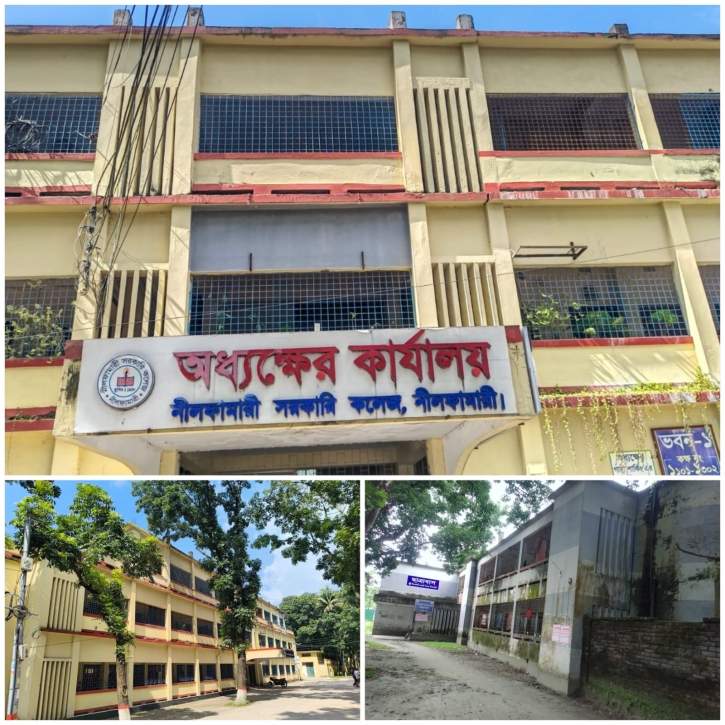
Standing tall across an expansive area of over twenty-six acres with the vision of spreading education and building enlightened human beings in the northern region, Nilphamari Government College remains a beacon of trust. For more than six decades since its establishment, this institution has been regarded as a symbol of confidence for thousands of students in Nilphamari district and surrounding areas. However, with the passage of time and changing needs, although the scope of academic activities has expanded significantly, the student population has grown at a geometric rate. Considering the education, accommodation, and other necessary amenities for this massive student body, the reality is deeply disappointing. The infrastructure and overall facilities have not seen any positive transformation aligned with modern demands. Currently, this traditional institution is burdened with acute crises and endless problems. On one hand, there is a severe shortage of teachers; on the other, there is a lack of adequate academic buildings, no dedicated transport facilities for students, and a acute dormitory crisis. Together, these issues are severely disrupting regular academic activities and the overall educational environment.
Looking back at history, the foundation stone of the college was laid on May 16, 1958, on a small plot of 2.78 acres filled with great hopes. Later, in response to public demand and to expand education, the college was nationalized on May 7, 1979. Over time, the college's total area has expanded to 23.15 acres, making it the highest seat of learning in the district. Today, around 18,000 students study on this vast campus. Among them, 15,000 are regular students enrolled in various honors courses, while nearly 3,000 are private or non-regular students. Yet, the facilities required to provide quality education to such a large population are practically non-existent. Regarding higher education, honors courses are currently available in 14 subjects. However, a stark disparity appears at the postgraduate or Master's level. Master's courses are available in only 12 subjects out of 14. Master's programs have not been introduced in two vital science subjects—Zoology and Physics. As a result, hundreds of students passing out from these two departments face immense anxiety and hardship. To pursue higher education, they are forced to move to colleges in other districts, which is both expensive and challenging for many.
The teacher shortage compared to the thousands of enrolled students is equally alarming. According to college sources, there are 83 sanctioned teaching positions, including the Principal and Vice-Principal. However, only 66 teachers are currently working against these 83 posts, leaving 23 crucial positions vacant for a long time. Although six teachers have been attached from elsewhere to cover the gap, it falls far short of actual requirements. Almost all major departments currently suffer from a severe shortage of faculty members. Vacancies include 4 posts in English, 3 in Economics, 3 in Management, 3 in Botany, 2 in Bangla, 2 in Accounting, 2 in Physics, 1 in History, 1 in Political Science, 1 in Zoology, and 1 in Mathematics. Due to the lack of necessary teachers in core subjects, conducting timely and quality classes daily has become extremely difficult for faculty members.
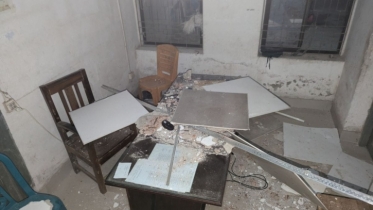
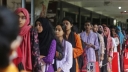
Compounding the teacher shortage is an acute infrastructure and housing crisis. Without adequate and modern academic buildings, the college constantly struggles with a shortage of classrooms. Expressing her frustration over the lack of seats and classrooms, Saraban Tahura, a second-year Honors student at Nilphamari Government College, stated that students face severe daily distress due to the lack of adequate classrooms and seating relative to their numbers. Because of insufficient academic buildings, teachers often cannot conduct classes on schedule and are forced to adjust class times or arrange alternate slots, breaking the continuity of studies. Meanwhile, housing for outstation students has turned into a nightmare. The only male dormitory is in such a dilapidated condition that a major disaster could occur at any moment; students reside there risking their lives. On the other hand, while there are two female dormitories, they are vastly insufficient for the female student population. Worse still, one of the female dormitories is in a fragile state and requires immediate renovation. Consequently, hundreds of students are forced to live in private messes or lodgings outside the campus at exorbitant costs, putting severe financial strain on families and exposing students to safety risks in private accommodations.
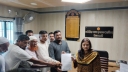
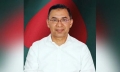
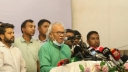
Expressing concern over the hostel crisis and student safety, Md. Payeluzzaman Roxy, Convener of Nilphamari Government College Chhatra Dal, stated that due to the long-standing accommodation crisis, students from poor rural families live in extreme uncertainty. Living in unsafe private messes outside campus leaves parents constantly worried. Building new dormitories immediately is a pressing demand. Furthermore, Master's courses should be launched in the remaining two subjects without delay. He added that to realize students' rights and address the college's overall interests, initiating the college student union immediately is essential. They plan to formally raise these basic and legitimate demands before Engineer Shahrin Islam Tuhin, guardian of the BNP in Nilphamari district, to facilitate quick and effective solutions.
Additionally, commute difficulties for students coming from far-off places have reached an extreme level. Thousands of students commute daily to this college from various parts and remote villages of the district. Highlighting the perspective of students and guardians, local resident and parent Ekramul Haq expressed deep frustration, stating that thousands of students regularly travel from around five upazilas of Nilphamari district. Traveling daily by bus or local transport costs students a significant amount of money and wastes valuable study time on the road. If the college administration could introduce dedicated transportation or bus services, students from low-income and rural families would benefit greatly, easing both their financial burden and daily hardship.
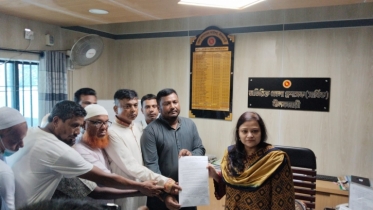
A. K. M. Siddikur Rahman, Principal of Nilphamari Government College, expressed deep concern and regret over the overall crisis, dilapidated infrastructure, and ongoing adversities. He stated that since its inception, this traditional college has maintained a strong reputation across the northern region. However, the reality is that operating this large college with 23 vacant faculty positions has become exceptionally difficult. Despite maximum efforts, without adequate academic buildings, proper classrooms, and necessary transport, it remains impossible to provide full facilities to students. The dormitory condition is dire—the old male hostel could collapse at any time, and one of the two female dormitories urgently needs renovation. There is also a major demand for transportation for long-distance commuters. However, administrative efforts have not stalled; written requests detailing these essential requirements—including resolving teacher shortages, constructing academic buildings, renovating risky dormitories, and improving transport—have been submitted to the Ministry of Education and higher authorities. If positive decisions and budget allocations are made quickly, the current dilapidated state of Nilphamari Government College can be transformed.