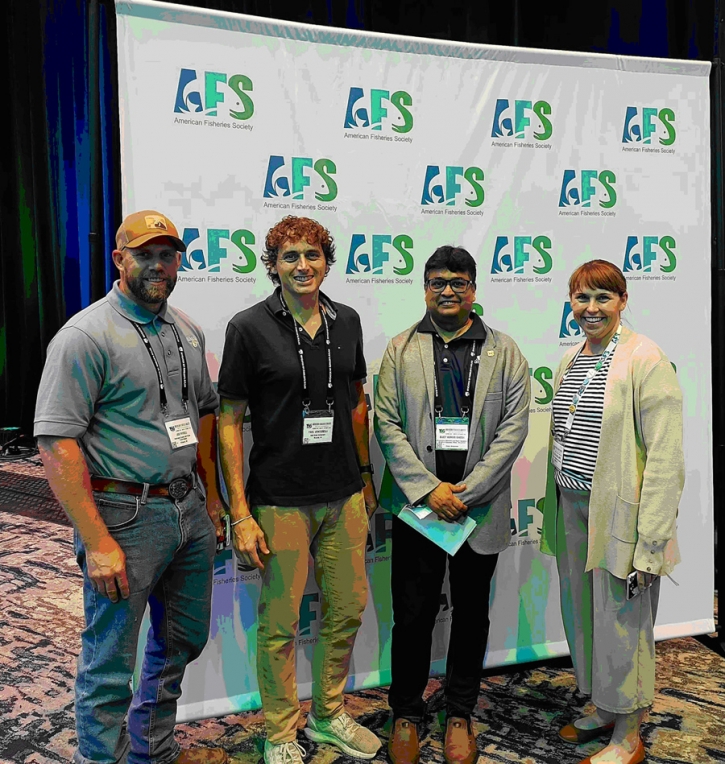
DHAKA/COLUMBUS, Ohio — Bangladeshi research scholar Bijoy Kumar Ghosh has presented his study on seasonal fish migration at the 2026 Annual Meeting of the American Fisheries Society (AFS), held in Columbus, Ohio, from August 30 to September 3 this year. Ghosh, a senior official at the Directorate of Secondary and Higher Education under Bangladesh’s Ministry of Education, attended the international conference after receiving an international travel fellowship. He represented Bangladesh at the gathering of fisheries professionals and researchers from different parts of the world. The conference returned to Columbus for the first time since 1933. Held along the Scioto River, this year’s meeting was organised under the theme, “The Heart of Sustainability: Habitat as the Foundation of Productive Fisheries.” The event was led by AFS President Gary Whelan in collaboration with the North Central Division and the Ohio Chapter.
Aligning with the conference theme, Ghosh presented his research paper, “Seasonal Variation of Fish Migration in Sariakandhi Fish Pass in Bangladesh,” on August 31. His study focused on seasonal fish movement through the Sariakandi Fish Pass in Bogura and its role in maintaining aquatic connectivity and supporting fish populations. Artificial fish passes remain a relatively new intervention in Bangladesh. According to the information presented with Ghosh’s research, the country currently has two fish passes and two fish-friendly structures in operation. These include the Sariakandi Fish Pass in Bogura and the Kawadighi Haor Fish Pass in Moulvibazar, along with fish-friendly structures on the Lohajong River in Tangail and the Morichardanga River in Chapainawabganj.
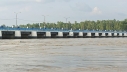
Ghosh’s research focused primarily on the Sariakandi Fish Pass, an aquatic corridor connecting the Jamuna and Bangali rivers. The research abstract states that the principal objective of the Sariakandi Fish Pass project is to facilitate the movement of fish fry, spawning fish and hatchlings from the Jamuna River to the Bangali River. The study examined seasonal patterns of fish movement through the pass and identified variations in migration among different groups of fish. According to the findings presented at the conference, carp spawning migration begins during the second week of May and continues until the third week of July. Catfish migration starts earlier, from the last week of March, and continues through the second week of June.
The research also noted the importance of the fish pass for several locally dominant fish species, including different species of catfish and smaller fish, while contributing to the movement and development of carp populations. One of the central aspects of Ghosh’s study was the classification of fish migration in the Sariakandi area into four seasonal periods. The first is the over-wintering or dry season, when migration is dominated by large carps and small catfish. Species such as Magur and Shing show notable movement during this period.
The second is the spawning season, marked by increased migration of small catfish and the beginning of spawning-related movement among other species. The third is the nursery or grow-out season, identified as a period of high fish movement involving carps, catfish and several other species. The fourth is the flood recession season. As floodwaters begin to recede, the study records increased movement of large-sized carps and catfish.
The seasonal classification provides a framework for understanding how changes in water conditions influence fish movement through the Sariakandi Fish Pass. The findings presented by Ghosh are particularly relevant to the broader issue of aquatic habitat connectivity. Fish migration is closely linked to access to suitable spawning, nursery and feeding grounds. Structures designed to maintain movement between connected water bodies can therefore play a role in supporting aquatic biodiversity. The Sariakandi Fish Pass provides a connection between the Jamuna and Bangali river systems, allowing fish to move between the two water bodies during different stages of their life cycles.
Ghosh’s presentation placed these seasonal movements within the broader context of habitat-based fisheries management. The study's focus also reflected the central theme of this year’s AFS meeting, which emphasised habitat as a foundation for productive and sustainable fisheries. The AFS meeting was not limited to the presentation of research findings. Participants also took part in workshops focused on communicating scientific research to the wider public. Ghosh participated in a workshop titled “Communication Strategies for Engagement and Impact.” The programme focused on practical approaches for helping fisheries professionals communicate scientific information to audiences outside the scientific community.
According to the workshop’s objectives, fisheries professionals do not always receive formal training in public communication. The session therefore focused on three key areas: understanding and connecting with audiences, developing effective messages, and explaining complex scientific information in ways that can be understood by diverse groups. The issue is particularly relevant to environmental and fisheries research, where scientific findings often need to be communicated not only to researchers but also to policymakers, local communities, resource managers and the wider public. Ghosh’s participation brought research on Bangladesh’s aquatic ecosystems to an international fisheries forum. His presentation focused on a specific fish migration system in Bangladesh while placing the findings within the broader international discussion on habitat conservation and sustainable fisheries.
The Sariakandi Fish Pass represents one example of efforts to maintain aquatic connectivity in a country where rivers, floodplains, wetlands and other water bodies play an important role in fisheries and biodiversity. The study's seasonal observations highlight the changing patterns of fish movement throughout the year and the importance of understanding those patterns when managing aquatic resources. By presenting the research at the AFS meeting, Ghosh also had an opportunity to exchange information with fisheries professionals and researchers working on similar issues in other parts of the world. His participation in the communication workshop further emphasised the importance of making scientific research accessible beyond academic and professional circles.
For Bangladesh, where fisheries and aquatic ecosystems are closely connected to rural livelihoods, food resources and biodiversity, research into fish migration and habitat connectivity can provide useful information for future fisheries management and conservation initiatives. The Columbus conference therefore served as both a platform for presenting Bangladesh-focused fisheries research and an opportunity for international exchange on the wider challenges of habitat protection and sustainable aquatic resource management.