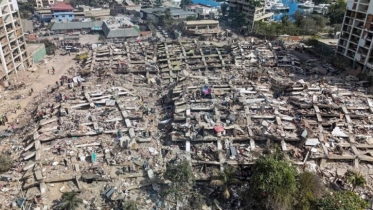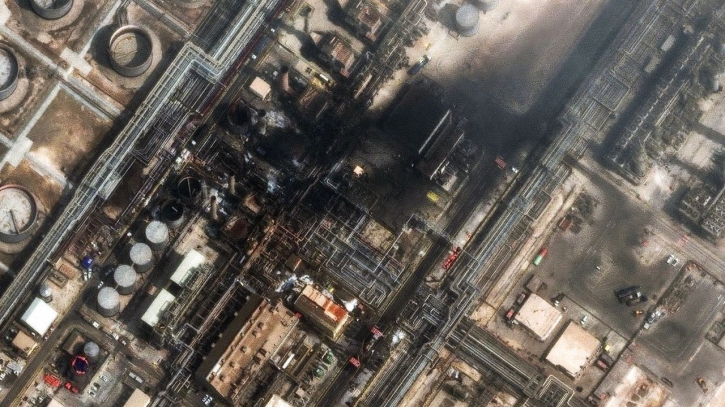
This satellite image provided by Vantor shows damage after a drone attack at Ras Tanura oil refinery, in Saudi Arabia.
As the United States intensifies its military operations against Iran, Tehran has adopted a strategy of retaliating against military and civilian infrastructure across Gulf states and Jordan.
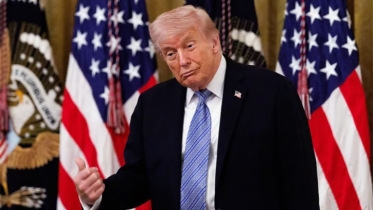
Analysts suggest this approach is designed to exert pressure on US President Donald Trump while carefully avoiding direct engagement with American naval assets or Israel to prevent a full-scale regional conflagration. According to an analysis from Al Jazeera, Washington’s strikes have targeted Iranian railway stations, power facilities, telecommunications networks, and drinking-water infrastructure. In response, the Islamic Revolutionary Guard Corps (IRGC) has launched attacks on civilian airports and water and power stations in Kuwait and Bahrain.
Strategic logic of selective targeting
Military experts highlight a clear logic behind Tehran’s restraint regarding US forces. Elias Hanna, a retired Lebanese Brigadier General and military analyst, noted that targeting US naval assets would trigger a “devastating” response from Washington. He further explained that such vessels are difficult to strike due to their sophisticated air defence systems.
Abdullah Bandar al-Otaibi, an assistant professor at Qatar University, concurred, stating that Iran avoids US naval assets for fear of “opening the gates of hell upon itself”. He observed that Tehran is also selective in other areas, such as avoiding US refuelling aircraft at Israel’s Ben Gurion Airport, to ensure the conflict does not widen beyond manageable levels.
Disputed justifications
The justification for hitting neighbouring states remains a point of intense debate. Atifeh Taghiani, a professor at the University of Tehran, argued that the US uses Gulf nations—specifically Kuwait—as launchpads for attacks on Iranian civilian infrastructure.
She maintained that international law grants Iran the right to retaliate against any country from which such operations originate.
However, this narrative has been dismissed as “propaganda” by Abdullah al-Shayji, a political science professor at Kuwait University. Al-Shayji pointed out that US strikes are launched from aircraft carriers, including the USS George W Bush and USS Abraham Lincoln, situated roughly 150km from the Iranian coast.
He emphasised that Gulf states have repeatedly assured Tehran that their territories are not being used for offensive operations and remain strictly for defensive purposes.
Impact on regional stability
The human and political cost of this strategy is mounting. Kuwaiti officials recently inspected significant damage at Kuwait International Airport following drone and missile strikes.
Al-Shayji noted that Iran’s attacks on water desalination facilities during the peak of summer are a deliberate attempt to cause civilian hardship in Kuwait, a nation that has historically been amongst the most opposed to normalising relations with Israel.
The broader regional impact includes a recent Iranian strike on Oman, occurring just one day after a visit to Muscat by Foreign Minister Abbas Araghchi. Analysts suggest this highlights Tehran’s desire to establish unilateral control over the Strait of Hormuz.
A tenuous conflict
The current hostilities began in late February following joint US-Israel attacks on Iran ordered by President Trump. Although both sides signed a memorandum of understanding in June to facilitate peace negotiations, each has accused the other of consistent violations.
While the Iran-aligned Houthis in Yemen have remained on the sidelines following previous US strikes, other factions like Hezbollah in Lebanon and groups in Iraq continue to suffer losses.
Al-Shayji argued that Iran’s current course is eroding its remaining credibility and suggested that Gulf states must now look toward a new regional security framework that reduces their reliance on US protection.