With the upcoming holy Eid-ul-Adha ahead, the farms in Nilphamari are now fully busy with the final moments of preparing sacrificial animals. Long before the Eid, the farmers of the district have been working day and night in rearing, intensive care, and fattening cattle. Aiming to supply healthy, strong, and disease-free animals to the market, the farmers and their employees have no time to catch a breath.
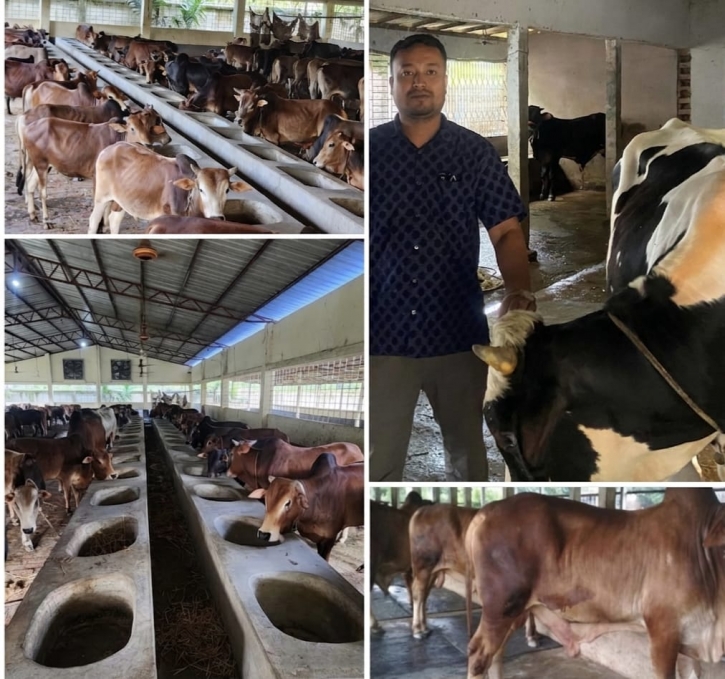
Visiting various farms in Nilphamari Sadar Upazila on the spot, it was seen that farmers are giving special emphasis to fattening cattle in a completely natural way without any harmful chemicals. Green grass, maize, oilcake, mustard oilcake, wheat bran, rice bran, and straw have been kept in the daily diet of the animals. Along with that, regular bathing of animals, a clean environment, and proper ventilation in the farms are being ensured. Farmers said that vaccines, vitamins, and necessary medical treatment are being provided regularly to keep the sacrificial animals healthy, as a result of which the buyers' trust in the animals of this district is increasing day by day. However, the abnormal price hike of cattle feed has emerged as a major challenge for the farmers this year. Due to the increase in the price of maize, oilcake, and other feeds, the cost of rearing cattle has increased significantly; nevertheless, farmers are leaving no stone unturned in the final moments of care with the expectation of getting a good price in the Eid market. Golam Rabbani, a farmer from the Ramnagar Chanderhat area of Nilphamari Sadar, said that he has reared 32 cattle this year and traders from far and wide have already started coming to his house to bargain, so he is quite optimistic about getting a good price if the weather remains favorable.
In the district, livestock traders and wholesalers are already visiting different farms to see the cattle and bargain in advance, and many farmers are selling animals directly from the farms to avoid the hassles of the cattle markets. Along with this, keeping pace with the times, a trend of selling animals on online platforms and a great response from buyers are being noticed. However, those concerned said that it will take a few more days for the main sacrificial cattle markets to fully gain momentum.
Meanwhile, a section of farmers expressed some concern over the potential influx of Indian cattle, because if Indian cattle enter the market, the desired price for domestic cattle may drop; however, if the borders and markets are controlled, the domestic farmers will benefit more.
"Md. Azmain Adil Sakib, the proprietor of 'Adil Agro', one of the largest farms in the district located at Maydanar Par, Uttar Singdoi, in Itakhola of Nilphamari Sadar, said that the demand for domestic cattle in the market is increasing day by day and farmers will benefit if Indian cattle do not arrive. This largest cattle farm in Nilphamari currently has more than 200 domestic bulls, out of which he has already sold more than 50 cattle. His farm has a collection of all types of cattle—small, large, and medium—and buyers are booking cattle online as well as coming in person, in which he is getting a very encouraging response."
On the other hand, Moni Shankar Roy, the owner of 'Monir Agro' located at Tupamari Sarkar Para, who has been operating this livestock farm for the long past 10 years, said that this year 20 domestic bulls are fully ready in his farm, out of which almost half of the cattle have already been sold and many buyers have made advance bookings. He mentioned that although the production cost has increased due to cattle feed in the market, the interest and trust of buyers in his farm's animals are much higher as he fattened the cattle in a completely natural way.
Alongside such festive preparations by the farmers, the District Livestock Department is in a strict position to prevent the artificial fattening of cattle using chemicals or harmful hormones and is providing regular monitoring and training to the farmers.
Nilphamari District Livestock Officer and Veterinary Surgeon Dr. Abul Kalam Azad said that farmers are being advised to use granular feed, green grass, and vitamins, and strict instructions have been issued not to use any kind of prohibited chemicals.
According to the final calculations obtained from the District Livestock Department sources, a total of 2,82,850 sacrificial animals are prepared in 34,803 farms, including both commercial and household ones, in Nilphamari this year. Among them are 51,881 bulls, 4,164 oxen, 25,865 cows, 94 buffaloes, 1,85,309 goats including 1 lakh Holstein or domestic breed goats, and 15,552 sheep. Although the total demand for sacrificial animals in the district this year has been set at 2,32,676, there will be a surplus of about 50,174 animals compared to the demand, which will be supplied to other districts of the country after meeting the local demand.
District Livestock Officer Dr. Md. Rashedul Islam confirmed the matter, stating that there are adequate animals prepared compared to the demand of the district this year, and the district administration and the livestock department are jointly prepared to ensure overall security, health services, and smooth buying and selling in the cattle markets. Furthermore, special veterinary medical teams will be deployed to provide immediate treatment if any animal falls sick in the market.
All in all, despite the increase in costs and slight uncertainty over the market, the faces of the farmers of Nilphamari are now filled with broad smiles of success and great expectations of economic prosperity due to the adequate supply and massive demand for domestic animals reared in natural methods.