05 Sep 1971, Lance Naik Nur Muhammad Sheikh
The serene beauty and texture of Bengal if not duly understood during the monsoon, it is the late autumn that gives every variety and element of inspiration to an artist for a paintjob with joy and opulence. But, the eyes of Sipahi Nur Mohammad could not see the finished artwork as he was brutally dealt by the nefarious force who killed him bayonetting.He asked to evacuate with one of the wounded members as they were caught unaware by the Pakistani force during patrolling. He was also injured at his shoulder by the splinter of a mortar shell.
Nur Mohammad handed over his light machine gun in exchange of a rifle from the evacuating members to cover up their safe withdrawal. He decided to keep the rifle so that even the attackers capture him, they merely get an ordinary weapon not the machine gun. Such a sense of responsibility and decision with bravery on that occasion are a glaring example of a commander’s behavior during tenacity. So, he decided to stay back, alone, at the center and soon the enemy started squeezing and closing the circle from different direction.
It was obvious that Nur Muhammad would not hold the enemy for long, but he was intelligent with his rifle and responded against attackers from multiple locations as if there were number of freedom fighters present and involved in the fight.
It was a silent moment; the air, not any single leaf was moving, the birds stopped chirping with shock, the surrounding was serene and quiet with dark shadows of long trees. Only the piercing sun rays had been reflecting on the body of Nur Muhammad being carried away following the village line by his fellow mates, on the shoulder with grief, respect and stunned silence. He would get his last farewell in his regiment. His breathless bayoneted body with popped out eyes was recovered from the area. The clotted blood on the soil left an impression for the future soldiers who would prepare and fight putting the patch of the same color under the badges of ranks, shoulder titles or as collar piping.
28 Oct 1971, Sipahi Hamidur Rahman
It is the bloomy blackboard, indicates the early winter with its magnificent colour and fragrance. The clusters of white to light green flowers grow in abundance over seven pointed leafy blades in sequence covering the canopy. A rivalry of beauty and showoff persists till the winter sets in spreading an intoxicating faint cinnamon fragrance mixed with a drop of squeezed lemon.
Anyone may halt and look back for a while to get the source; or to the glimpse of past memories, while growing up experiencing such odour in the dark green villages of Bangladesh.
Sipahi Hamid a valiant fighter from the Senior Tiger was clearing the Pakistani force from one of the occupied villages of Bangladesh in the far-flung bordering area named Dholoi. While the liberating force had been experiencing a stiff resistance from the Machine Gun post of the border out post, the progress halted. Volunteering to neutralize the enemy Machine Gun, the impish, countryfied Sipahi Hamidur Rahman crawled up to the bunker with a pair of grenades, lobbed them, and successfully stopped the machine gun. This action allowed the liberating force to progress and defeat the Pakistani forces. Even though he received a bullet injury in the process, the determined and brave son of the soil didn't give up; instead, he engaged further with two Pakistani soldiers unarmed till he died.
This unprecedented bravery and courageous act inspired every libertarian determined for freedom. Hamid; a jolly good fellow, so lively, prior to the attack, walking along the aisle barefooted, dislodging dewdrops formed over the greyish straws of the paddy field with his feet a while ago, had been resting forever at a distance with an accomplishment. The mist, accompanied by the fragrance of early winter, covered his tranquil body. A traversing teenager of his village, sacrificed his life for the greatest cause of a nation and for an independent Bangladesh.
10 Dec 1971, Engine Room Artificer Ruhul Amin
December is normally the winter season in Bangladesh, not always bitter cold but the mornings are great to enjoy with the warmth of sunshine. Often it is lazy and little late to start every day, except for those who prepare foods for others either in the kitchen, or in the corn fields. The divine atmosphere with a lot of freshness offers a sense of purity all around.
However, the winter of 1971 was not full of fresh air, dead bodies were very common to find around. Even the vultures lost appetite of eating human flesh. By the first week of the December 1971, due to surrenders, most of the areas were free of Pakistanis but not Razakars. They had been waiting on the bank of river Rupsha for a wounded Ruhul Amin who was the chief Engine room artificer of ‘Palash’, one of the two gunboats received from India. He tried to extinguish the fire due to at unfortunate bombing incident by friendly aircraft.
Even though the instruction was to abandon the ship but the wounded Ruhul Amin wanted to save it at any cost. While the fire broke out all-around he alone could not do anything and dived into the water. He started swimming towards the bank slowly with one hand. A severely wounded and bleeding Ruhul Amin though survived the air attack and reached to the bank but was not spared by the Razakars, who was waiting with charged bayonets! His corpse was left abandoned neglectfully, for few days, cold and unattended, in the same place where he was killed. The Rupsha washed his sacred body and feet; and remains as a close companion beside his grave yard till today, every day and night. The rivers of 1971 get blurry at a distance on the canvas while the strokes of the artist are pale and tired.
14 Dec 1971, Captain Mohiuddin Jahangir
Winter as described is traditionally cold also accompanies with ‘spotless white mist’ along the village lines and rivers of Bengal. In the month of December, the sloppy banks of the rivers are comparatively firm and marked with a parallel walkway just immediately bellow along the steep soil. This path is commonly used by the villagers to avoid successive eroded windings often blamed for reducing the pace and unnecessary delay to destination.
Without artillery fire support, infuriated and awaiting Captain Mohiuddin Jahangir wanted to draw a deliberate but quick path of victory against the few last-held positions of Pakistani forces along the bank of the river Mahananda. He was craving for an Independent Bangladesh, and sought for it at any cost and as quickly as it was possible. Anything other than a victory was undesired, as if all the Bengalis shall follow the path to evict Pakistanis from the District of Chapai Nwabganj.
By then under the leadership of Captain Jahangir this group could already create enough thanatophobia in the heart of the Pakistani soldiers and in some occasions, they retreated even prior to launching an attack. As it appeared too late for Jahangir and his team to wait, on 14 December 1971, a group of only twenty freedom fighters decided to launch without fire support. This group was extremely courageous and skillful, and they had been clearing enemy positions one after another. They maneuvered very intelligently in a way due to which most of the enemy positions failed to identify their presence until they were engaged. The group was very agile and enthusiastic so was their commander Captain Jahangir. At some stage once there was only one position left, he received martyrdom due to a bullet injury. It was only two days left for him to see the flag of a free Bangladesh flying high with so much of honour that a few nations can be proud of achieving through struggle and war. He was buried at the Shona Masjid in the late afternoon wrapped in white not as spotless white mist but deep red as if his sacred blood was eager to settle on the soil of an independent Bangladesh.
16 December
Today we walk by the path created by our heroes, unhindered. But we seldom look back at the struggle to achieve this condition and try to realize their sacrifice for our smooth journey. Their boyhood, band of brothers, the picturesque village of Bengal, the wet soil, rich and ample nature made them so brave and so generous, and to bestow the most precious thing for every living being, their lives for us.
Coincidentally, all of them died in the smooth and intimate nature, where the sun shine was refused by the dark trees, at the places they would loiter every morning, day, and afternoon. And also close to the rivers, the lifeline of our fertile land, as if they wanted to remain permanently imbedded whenever anyone imagines the nature of a free Bangladesh. Even Matiur crashed near the Indus, as if the task would remain unfinished if he did not follow the other six. Today, we write about their valor and sacrifices sitting in the room temperature, reading it, wearing worm clothes in the cold winter, or might be walking and enjoying rain in the chiffon. There is no reason to be afraid. Their souls are resting scattered in the corners and edges of the country, contended and complacent by sacrificing their lives in the search for our freedom.
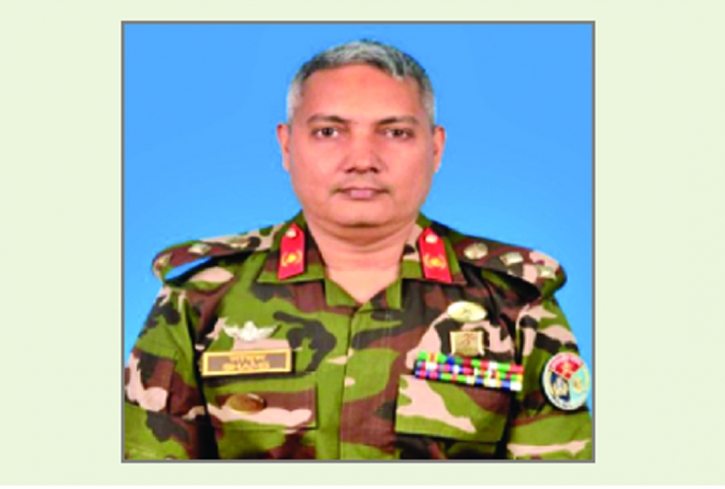
The writer is a Colonel of Bangladesh Army. He can be reached at shamsmoin@yahoo.com